
Abstract Through Process: Paint & Print with Ginny Elston

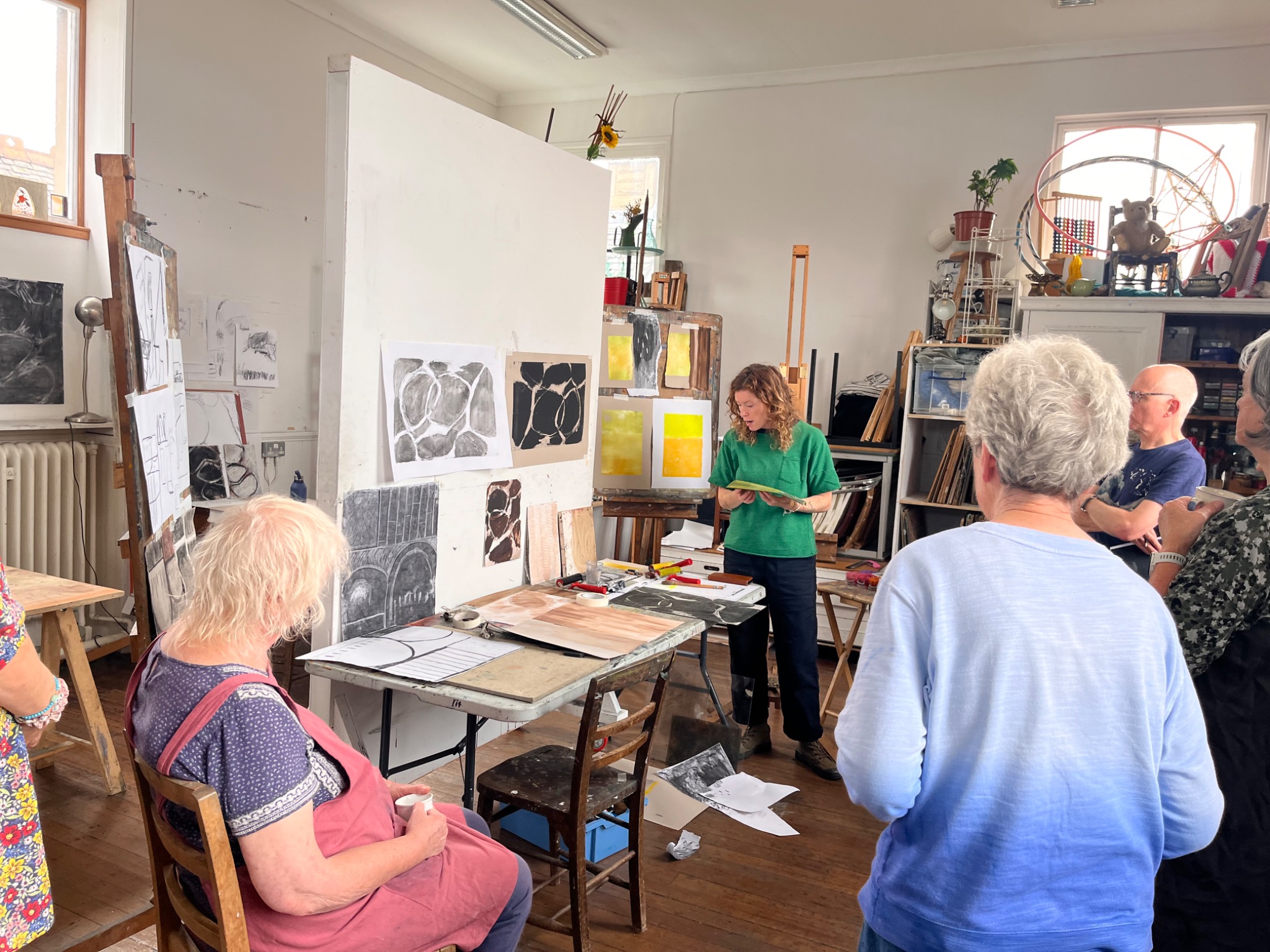
Across three days, Abstract Through Process: Paint & Print moved from looking and gathering, through drawing and monotype printmaking, and into paint. Led by artist and educator Ginny Elston, the summer school explored how simple marks, shapes and motifs could be collected, combined and gradually developed into new abstract imagery.
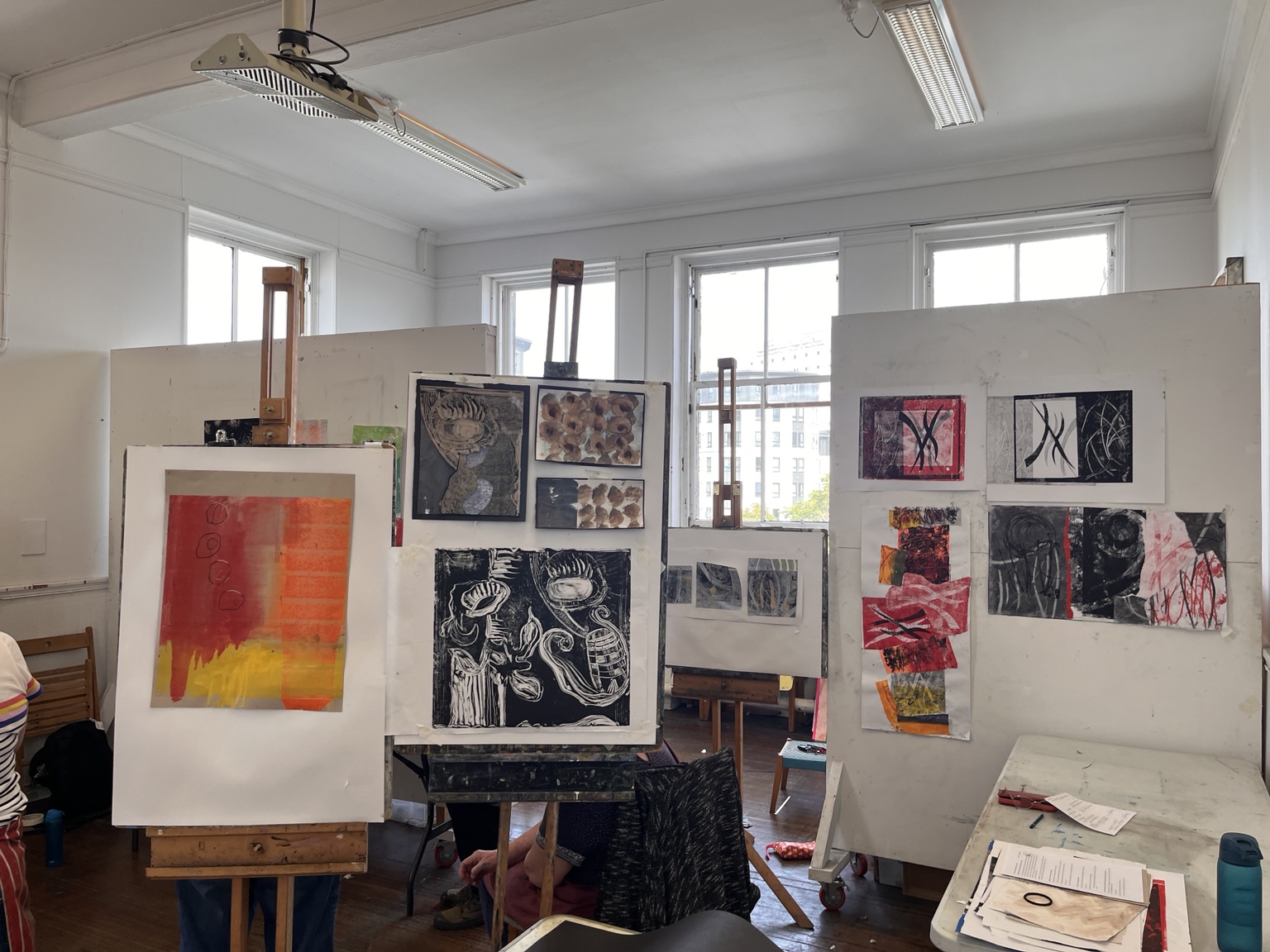
The workshop began with a short walk to observe the local surroundings and look for interesting shapes, structures and textures. Rather than making traditional observational drawings or finished images, participants were encouraged to draw as a way of gathering: collecting marks, fragments, shapes and motifs that could later become source material.
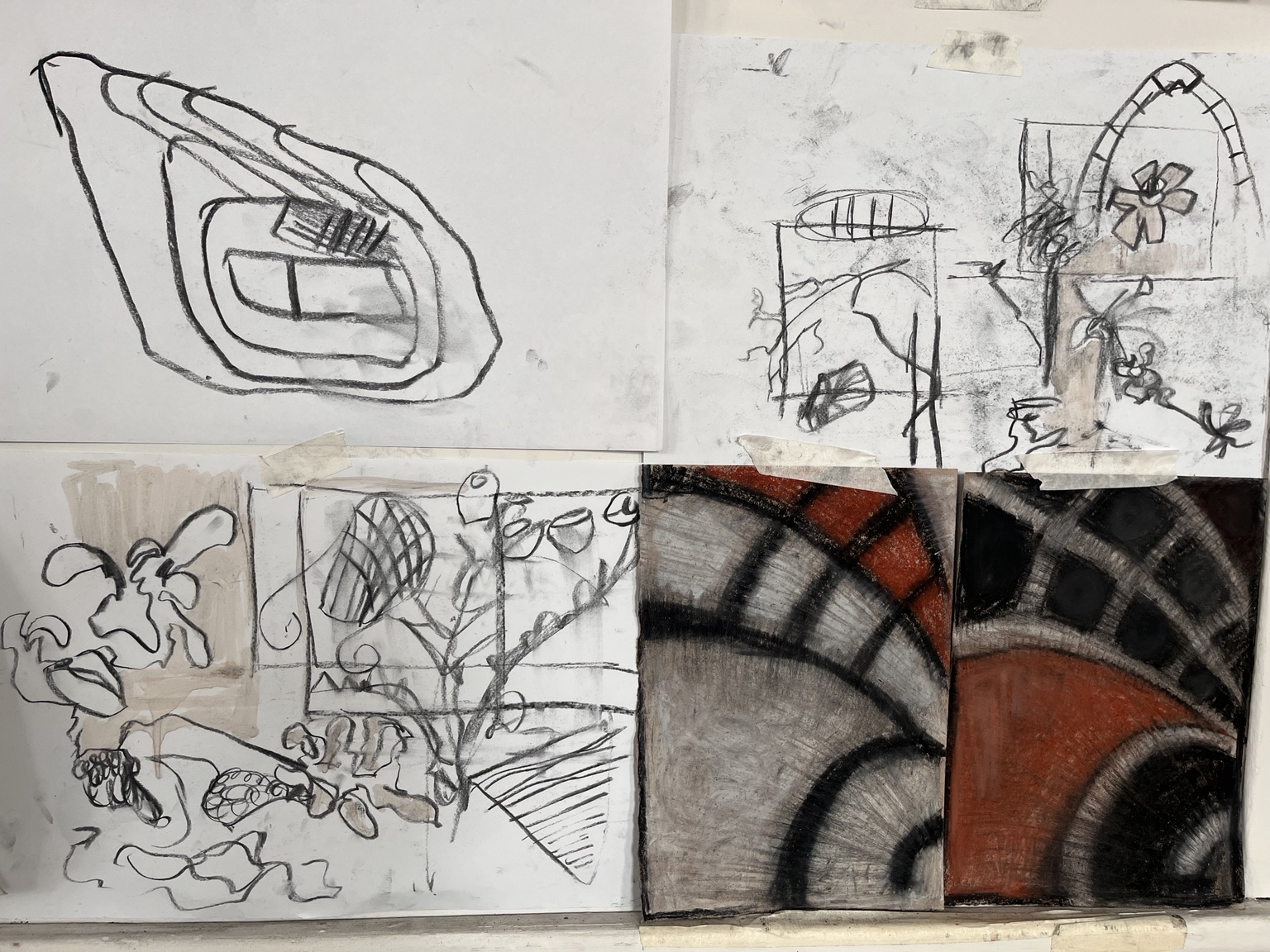
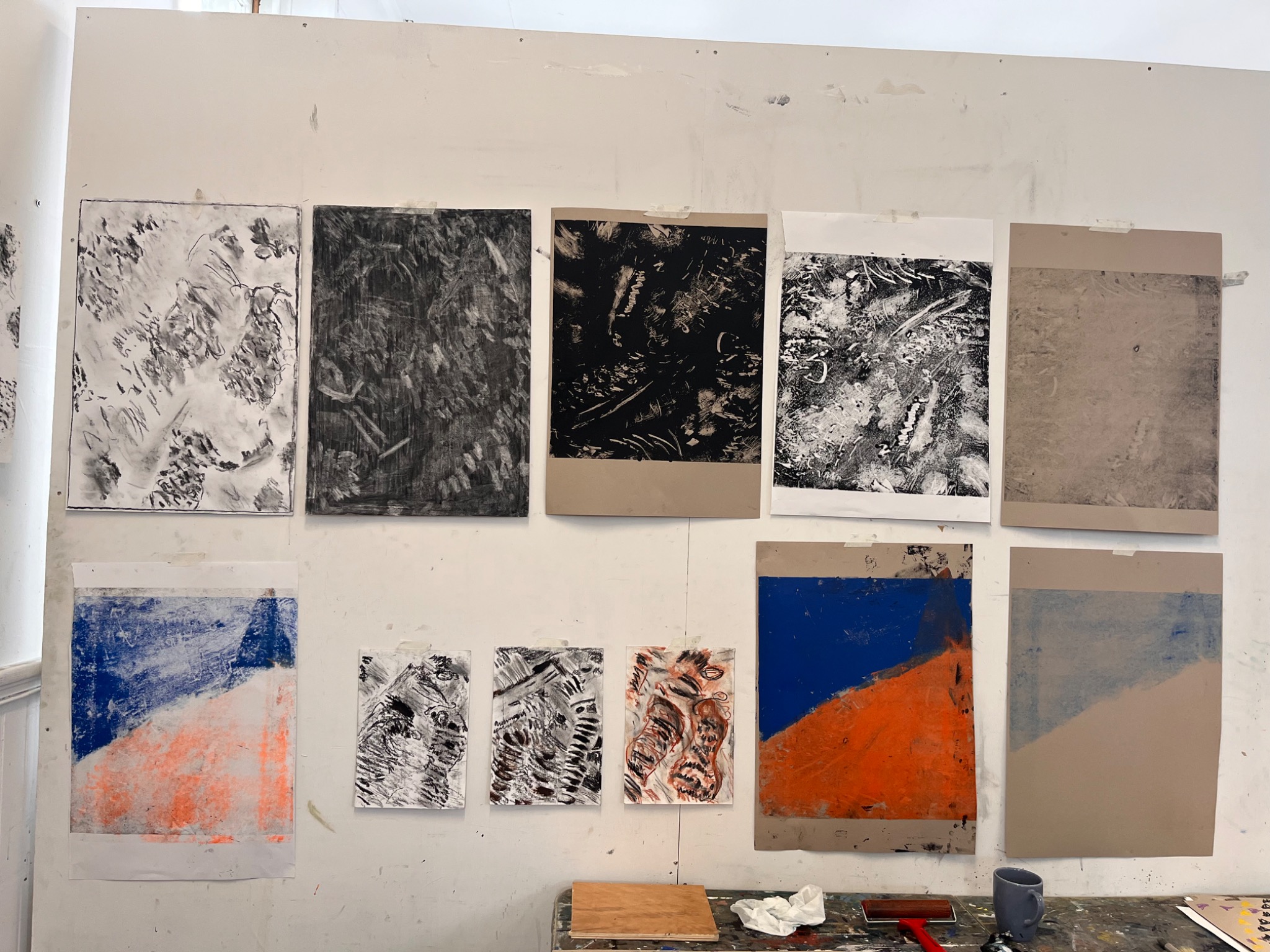
Back in the studio, this visual research was developed through drawing, paint and experimental mark-making. Participants worked with charcoal and a range of tools, scratching into and removing material so that the original observations became increasingly abstract.
This approach connected closely with the work of Prunella Clough. Working in post-war Britain, Clough gathered overlooked details from urban and industrial surroundings through sketches, photographs and written notes. She then selected, combined and reworked them, shifting familiar forms away from direct representation. Her work often sits between figuration and abstraction: grounded in something observed, but transformed through memory and the process of making. Clough moved between painting and printmaking, and the languages of the two processes seem to weave together in her work.
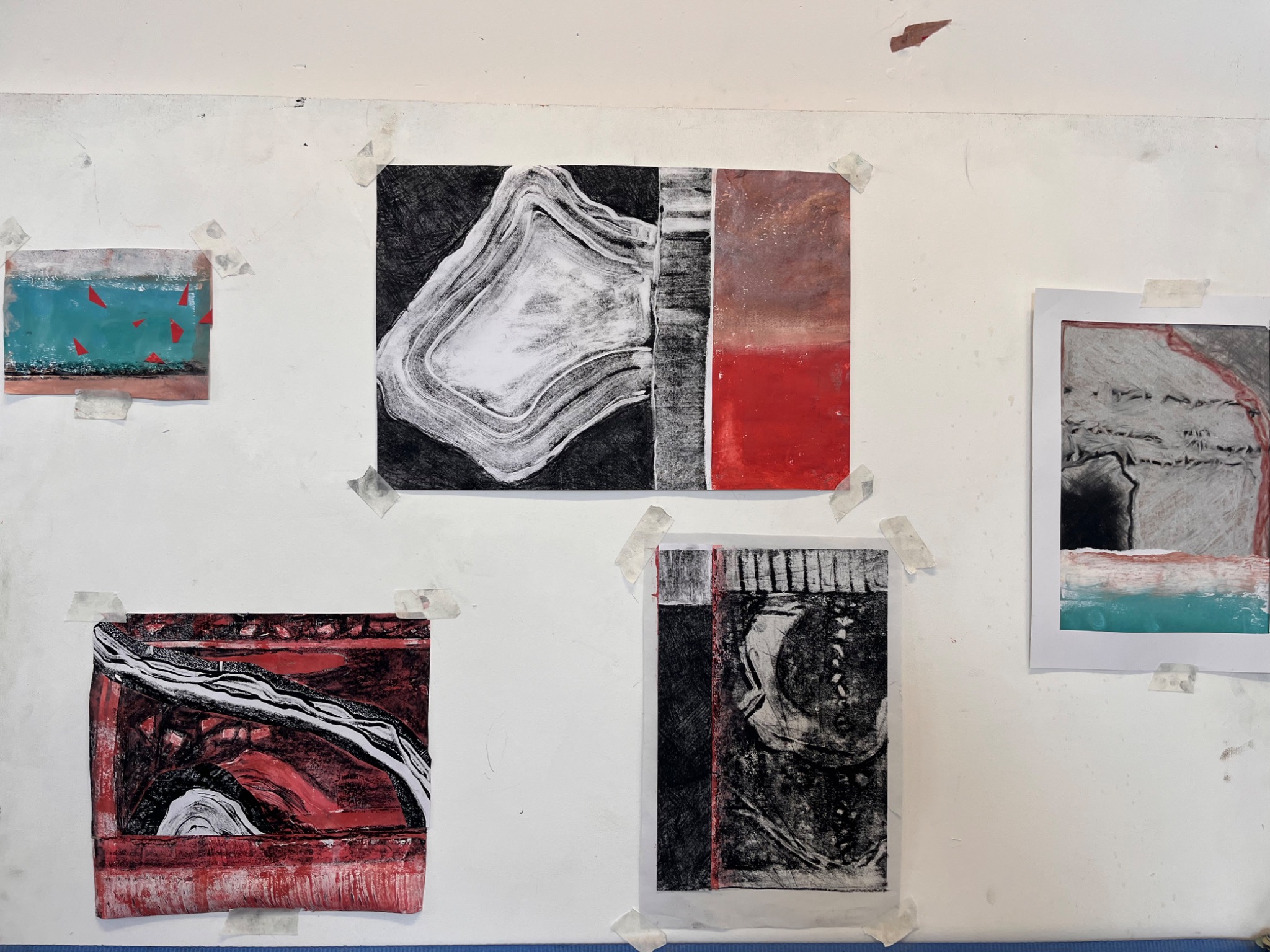
On the second day, the marks and imagery gathered through the initial research were developed through monotype printmaking. Participants explored both black and white and colour, using their drawings as source material rather than as fixed compositions to copy. Marks and fragments could be rearranged and combined, creating new relationships and unexpected abstract images.
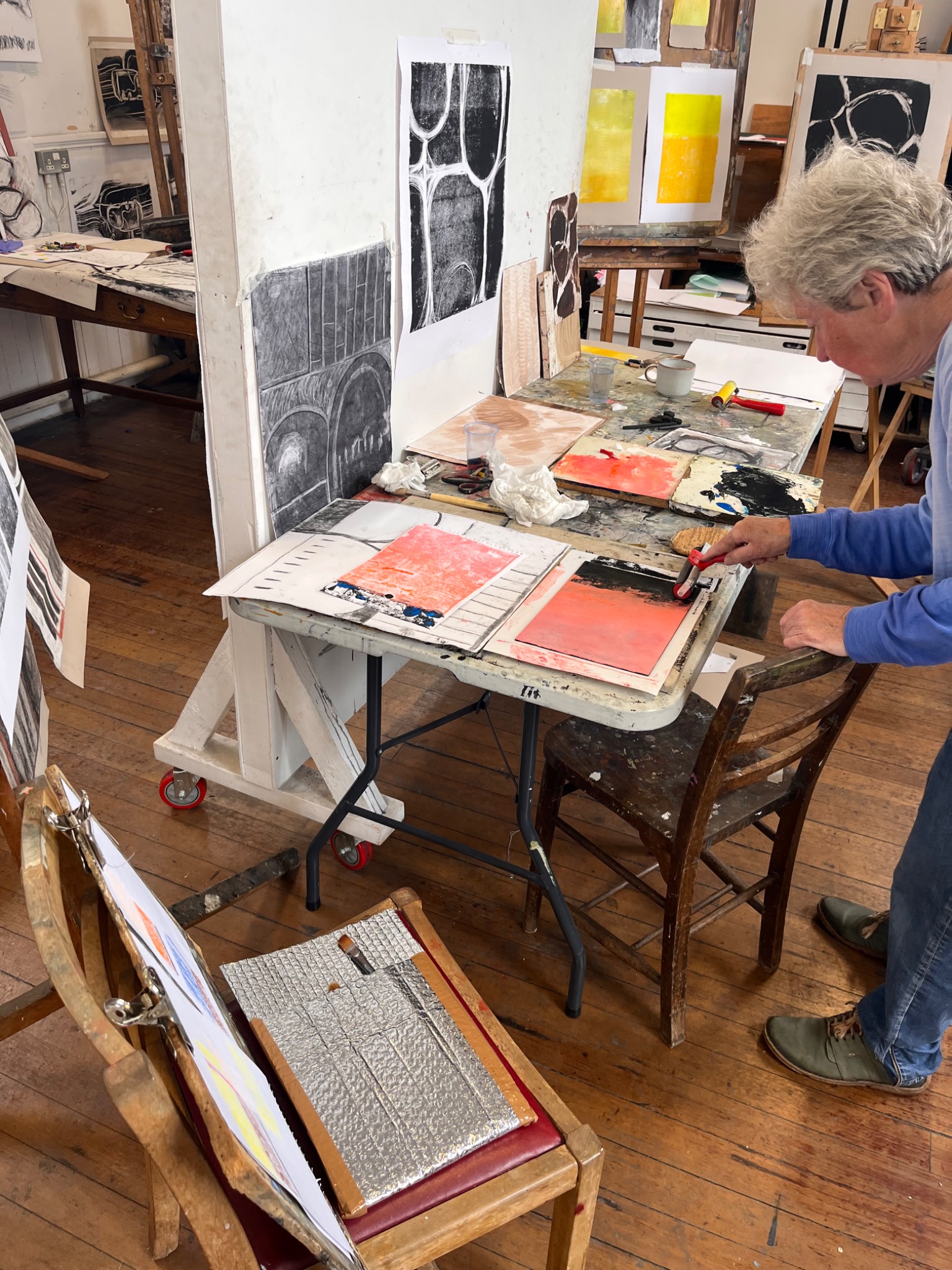
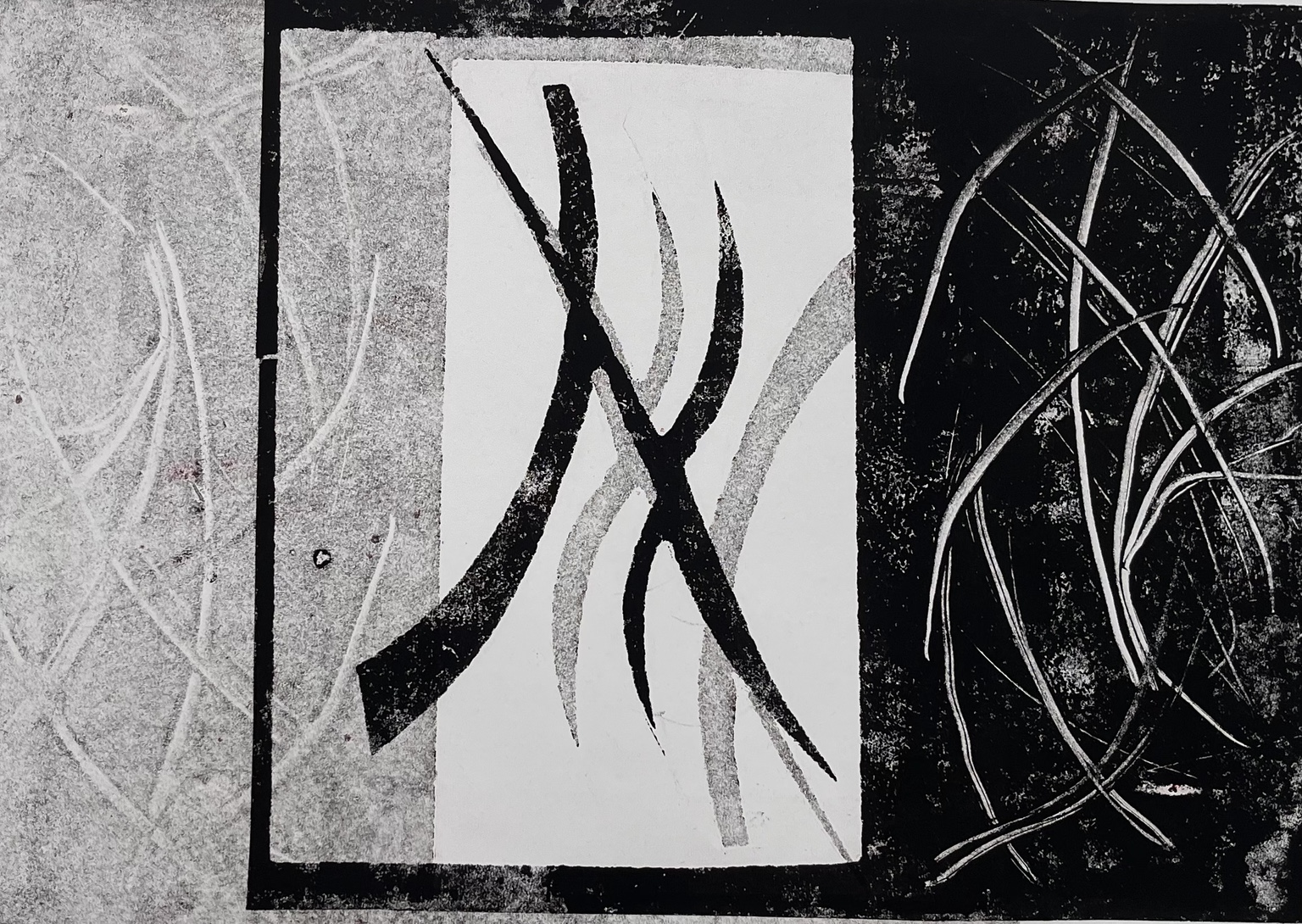
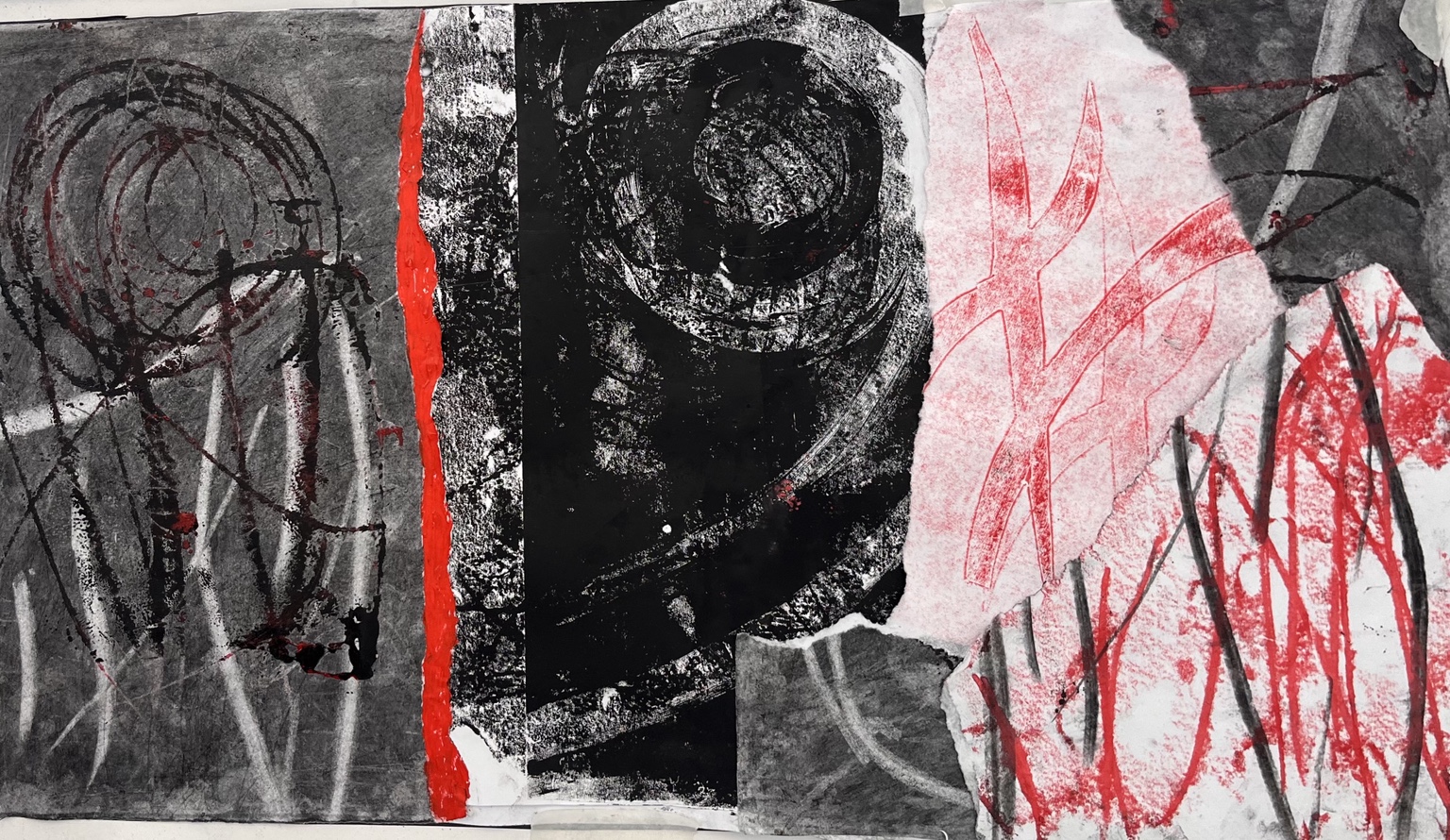
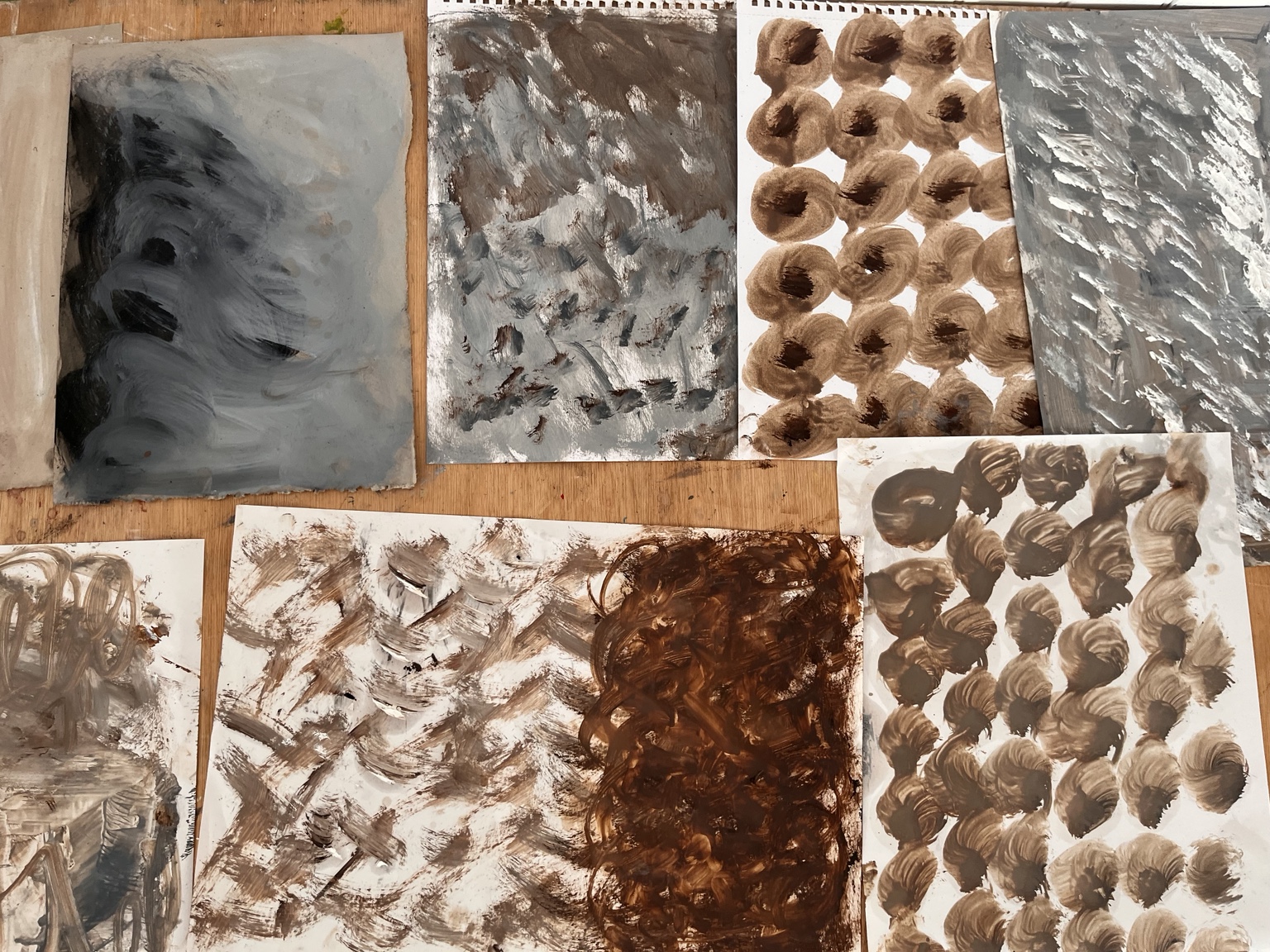
On the final day, participants returned to painting, using the drawings and monotypes from the previous two days as starting points. As they considered how to bring these different processes together within a single piece, the work of contemporary Scottish painters Delia Baillie and Graham Lister offered useful ways of thinking about gesture, colour and the combining of different visual languages.
Across the workshop, one process continually informed the next, generating momentum and rhythm for each new set of decisions in the studio. Observations became drawings, drawings became prints, and prints created new possibilities for painting.
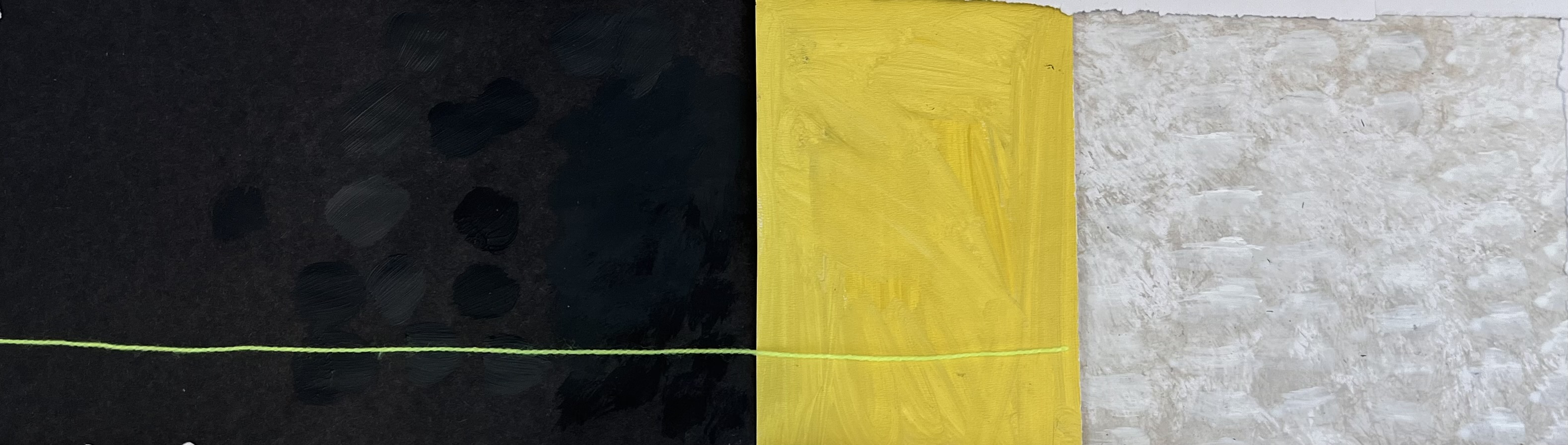
The result was a rich collection of sketches, experimental drawings, monotypes and abstract paintings, each connected to that first act of looking and gathering.
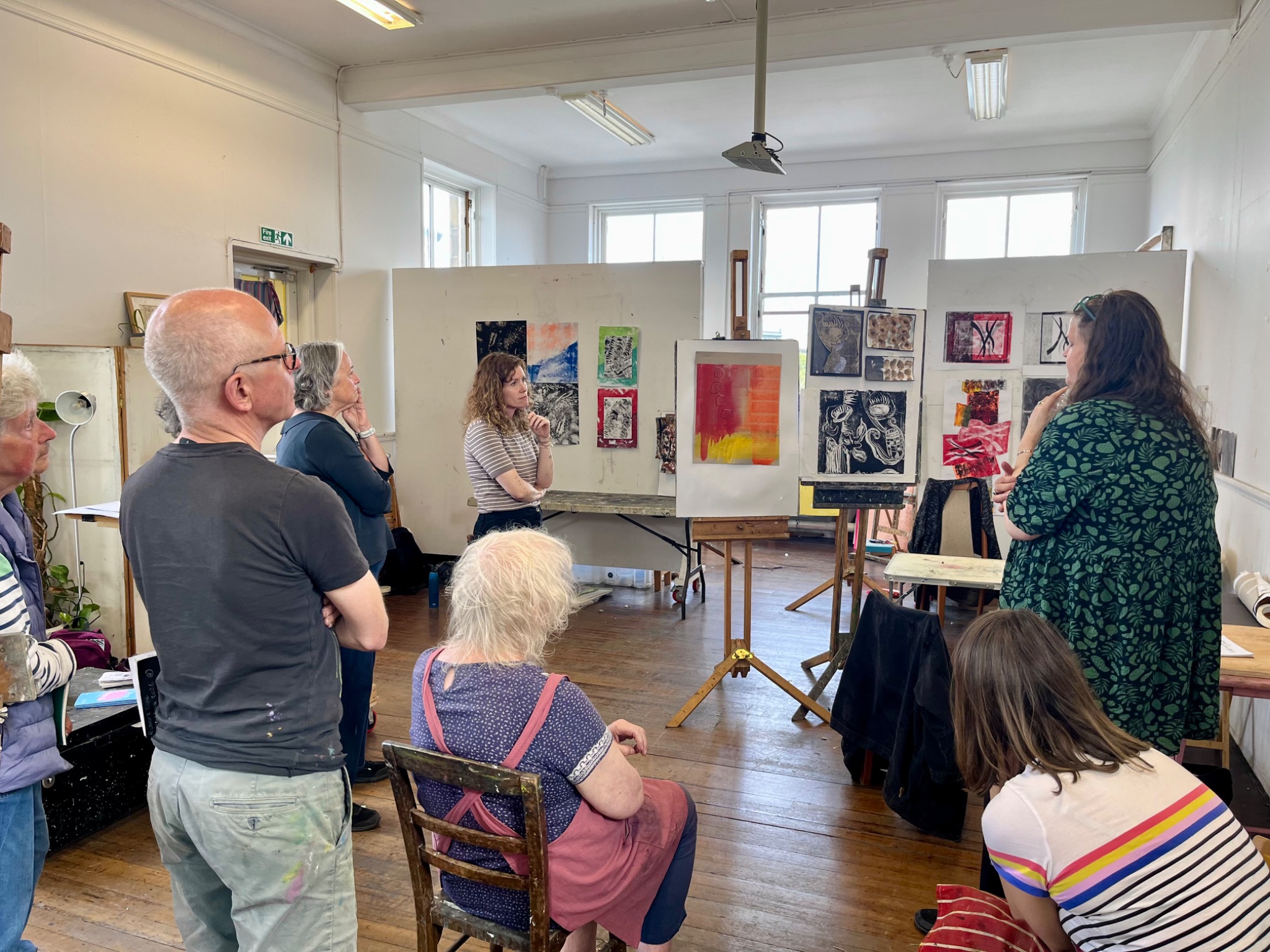
Thank you to Ginny and everyone who joined us for such a generous and absorbing three days in the studio.


Comments