
Expanded Drawing: Notes from Practice


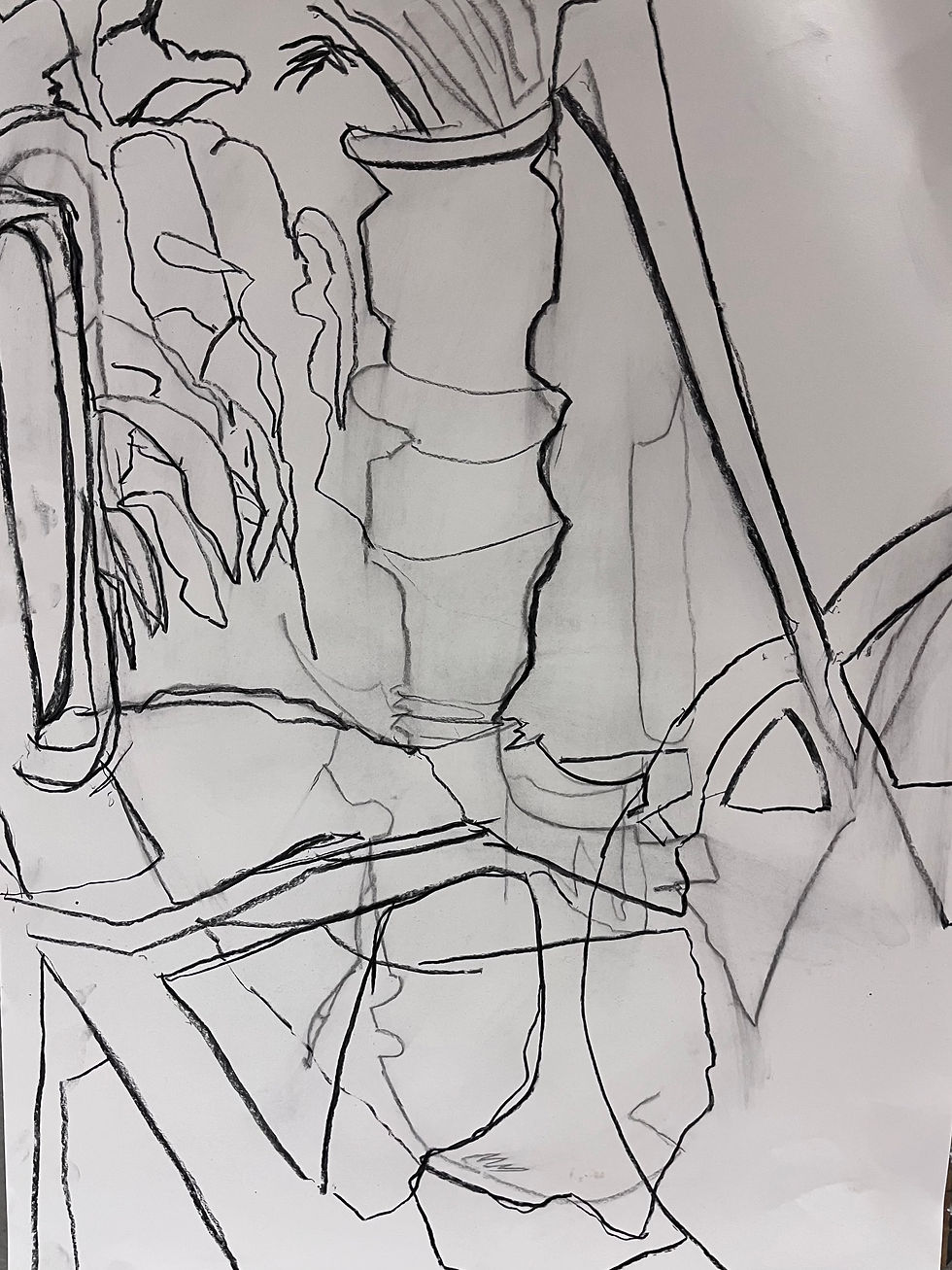
The idea of what drawing is has shifted over time. It no longer just means pencil on paper or drawing from observation. Drawing can be mark-making, movement, repetition, memory, collaboration, or a way of thinking something through. It can happen on a page, but it can also happen through objects, materials, sound, light, or actions in space.
For me, drawing has always been closely tied to physical presence. Much of my practice from installation, object-making, performance feels like drawing too. Not because it looks like drawing, but because it operates in a similar way: marks made through contact, pressure, movement, and time. Lines aren’t always drawn. Sometimes they’re pressed, rolled, cast, dragged, or accumulated.
Around 2016, while working on an installation, I began experimenting with drawing with an object rather than drawing from it. I was working with an oversized 1980s StorageTek computer unit and started using ink rollers to take surface impressions directly from it as a means of recording its presence. The marks that emerged weren’t images of the object, but traces from it — records of contact rather than representation.

Looking back, that work feels like an early articulation of what I now think of as expanded drawing. At the time, I wasn’t trying to define it. It was simply a way of working that made sense for the questions I was asking. Drawing became a way of staying close to material, of letting process lead rather than image.
A couple of years later, I co-ran a ten-week experimental drawing course with Sarah Calmus that pushed these ideas further. We worked through surface impressions, movement, object-led drawing, printmaking, reliefs, and projection. Drawing moved across paper, walls, objects, and space. The final sessions pulled these fragments together into a small installation built from accumulated marks and residues.

Recently, while looking back through images from that course, I was struck by how closely they align with the questions I’m still asking now. Those sessions feel like a precursor of an earlier version of Expanded Drawing before it had a name.
Expanded Drawing isn’t about abandoning traditional drawing skills, and it’s not about novelty. It’s about widening the territory that drawing is allowed to occupy. Drawing as research. Drawing as encounter. Drawing as something that unfolds through doing rather than resolves into a finished outcome.
Sometimes the work stays on the page. Sometimes it doesn’t. Sometimes what’s left behind is a fragment, a trace, or a question rather than an image. Nothing finished. Just space to test ideas, follow materials, and see what drawing might become.


I was checking goa game register online and wanted to know if the experience is the same on browser and the app. Is there any difference in speed, result updates, or features between both options?
A profile that looks cohesive and intentional can make a strong first impression even before someone reads your bio. The ideas in this guide from Biovelt cover both the visual and textual sides of your Instagram presence. What I found helpful is the way it breaks down different aesthetic styles and explains how to apply them consistently across your posts. The optimization strategies go beyond basic tips, touching on how to align your profile with your content goals. If you have been struggling to define your profile's look or message, the examples provide a clear starting point. The practical suggestions in Biovelt's profile ideas for Instagram are easy to adapt to your own account.